


Geopolitical cataclysm in the Middle East – global fallout and the impact on the European energy markets
Updated: Apr 9
On 2 April 2026, Brussels Energy Club held an in-person interactive discussion dedicated to the topic:
Geopolitical cataclysm in the Middle East – global fallout and the impact on the European energy markets
The discussion took place against a backdrop of increasing geopolitical uncertainty. As tensions in the Middle East continue to evolve, global energy markets have once again come under pressure.
Participants reflected on the broader shift away from the relative stability of the post-Cold War period, as well as on the growing unpredictability of global political and economic dynamics. Particular attention was given to the implications of the current crisis in the Gulf, which is contributing to renewed volatility across oil and gas markets.
The session addressed key questions regarding the depth and duration of the crisis, as well as the ability of international energy markets to adapt. A strong focus was placed on the tightening global LNG market and the challenges facing European buyers in securing supply amid rising price pressures.
Europe’s continued dependence on gas imports was highlighted as a central vulnerability, raising important policy questions at both EU and national levels regarding the security of supply in the months ahead.
Key discussion points
The session explored:
• The state of the damage to oil and gas production facilities in the Gulf region
• Disruption to LNG traffic in the Strait of Hormuz
• How global gas markets are adjusting to damage and disruptions
• The evolving gas price environment
• Implications for European buyers of LNG and gas consumers
• Policy options: market intervention measures, supply management and pricing
• The geopolitical level – the state of conflict in the Middle East and possible end games
• The geopolitical level – implications for the war in Ukraine, Russia and Europe
Agenda highlights
Session 1: Assessment of global LNG and the implications for European gas markets.
Guest speaker: James Taverner, Executive Director, Global Gas and LNG, S&P Global Energy CERA
Session 2: Geopolitical assessment, challenges and options for Europe
• The Middle East – Iran and the GCC
Dr Marat Terterov, Head of the Brussels Energy Club
• Europe, Russia, Ukraine
Dr George Niculescu, Head of Research, European Geopolitical Forum, Brussels
Former-NATO International Staff, Brussels
Speaker information

James Taverner is Executive Director, Global Gas and LNG, S&P Global Energy CERA, with a particular focus on Northeast Asia (Japan, South Korea, and China). His expertise includes quantitative analysis and model building of supply, demand, and price fundamentals; analysis of government policy and regulation; and gas market development. James was the project manager and lead researcher for the major S&P Global Multiclient Study "The New Map of Global Gas," an in-depth analysis of the potential impact of unconventional gas on supply, demand, trade, and price in the global market. He has contributed to numerous other studies, including "Global Gas Reset," "LNG in Transportation: Challenging Oil's Grip," and "Solving the Tangram: China Regional Gas and Power Scenarios." He is based in London and has previously worked in the S&P Global offices in Paris, Beijing, and Tokyo, where we worked with local clients and international companies targeting those markets. James holds a Master of Arts from Cambridge University, United Kingdom.

Dr Marat Terterov is an acclaimed expert and practitioner of international relations with a DPhil from St. Antony’s College, Oxford University. The subject of his DPhil was Middle Eastern political economy, public enterprise reform and privatisation. Dr Terterov’s expertise has expanded over the last 20 years to include global energy investment processes, international energy security and Eurasian geopolitics. He has been associated professionally with international publishing firms, think tanks, academic institutions and business development forums since the late 1990s. Between 2008 and 2022, Dr Terterov was an advisor, negotiator and trainer for the Brussels-based Energy Charter Treaty, whilst also lecturing at the University of Kent’s Brussels School of International Studies. He is currently the Principal Representative of the Brussels Energy Club ASBL, a corporate networking platform connecting energy professionals and enabling business projects across the global energy chain. He has a significant public profile on the internet, having published widely on the subject matter of his expertise. He contributes regularly to public debates on energy and geopolitics at high-profile international events.
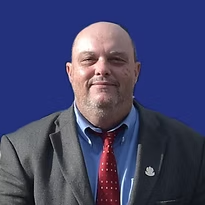
Dr George Niculescu is the Head of Research of the European Geopolitical Forum in Brussels (since 2012), and author of its current flagship publication “Geopolitical Trends” (http://shop.gpf-europe.com/products/id/egf-geopolitical-trends-fall-2025-279/). In 2019, he earned his PhD degree in Political Sciences from the National School of Political Studies and Public Administration (NSPSPA) in Bucharest. His PhD thesis addressed “Western Confrontation with Russia at the Beginning of the 21st Century: Security Scenarios Planning in the Area from the Baltic Sea to the Wider Black Sea (Inter Marium)”. Dr Niculescu completed Advanced Studies at the George C. Marshall Centre in Garmisch-Partenkirchen and at the Royal College of Defence Studies in London. From 2004 to 2010, he worked as a NATO staff officer focusing on partnerships and cooperation mostly with countries from the Greater Black Sea Area (GBSA). In 2016-2018, he performed as Team Leader for a CSDP Study under the EU’s HIQSTEP (High Quality Studies for the Eastern Partnership) programme. Dr Niculescu was involved in various international research projects and published extensively on GBSA geopolitical, geoeconomic, and regional security affairs.


Comments